
How to receive SMS using the Ozeki MCP SMS Gateway with the MCP Inspector
This guide walks you through using the MCP Inspector tool to retrieve incoming SMS messages from Ozeki SMS Gateway through the MCP protocol. By following this tutorial, you will learn how to connect MCP Inspector to your gateway, and use the incoming messages tool to confirm that the message was received and is accessible through the MCP interface.
What is MCP Inspector?
MCP Inspector is an open-source developer tool provided by the Model Context Protocol project. It allows you to connect to any MCP-compatible server, browse the tools it exposes, and invoke them directly from a web interface. It is particularly useful for testing and verifying that your MCP server is working correctly before integrating it into a larger workflow.
MCP Inspector connection details
# Launch MCP Inspector using npx
npx -y @modelcontextprotocol/inspector

# In the MCP Inspector interface, use the following connection settings:
# Transport type: Streamable HTTP
# Proxy setting: Via Proxy
# Server URL (replace {address} with your Ozeki SMS Gateway host IP):
http://{address}:9529/mcp

# Custom Headers:
# Authorization (replace with your API key):
Bearer abcd1234
Steps to follow
We assume Ozeki SMS Gateway is already installed on your system
and you have already created an MCP user account with an API key.
You will also need Node.js installed on your system,
as MCP Inspector is launched via npx.
Read more about the MCP inspector at: Model Context Protocol (MCP) Inspector
- Send a test SMS via the SMPP client
- Launch and configure MCP Inspector
- Connect to the gateway
- Run the list incoming SMS messages tool
- Confirm delivery in the gateway logs
How to receive SMS using the Ozeki MCP SMS Gateway with the MCP Inspector video
The following video shows how to retrieve incoming SMS messages from Ozeki SMS Gateway using MCP Inspector step-by-step.
Step 1 - Send a test SMS via the SMPP client
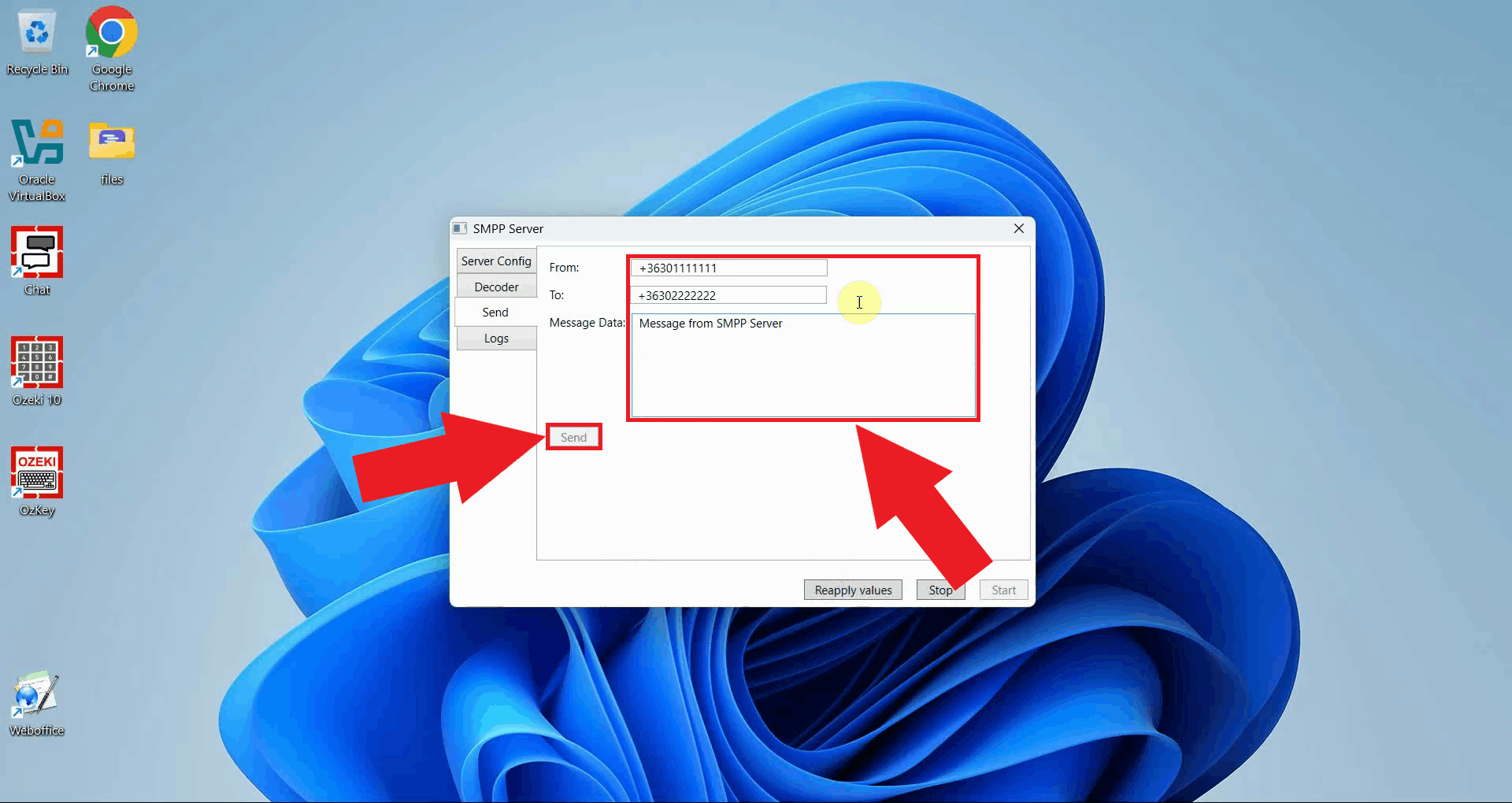
To have an incoming message available to retrieve, you first need to send one to your gateway. In this example, a local SMPP server tool is used to simulate an incoming message by submitting it directly to Ozeki SMS Gateway. In a production environment, this message would arrive from a mobile phone or any other SMPP-connected system (Figure 1).
Step 2 - Launch and configure MCP Inspector
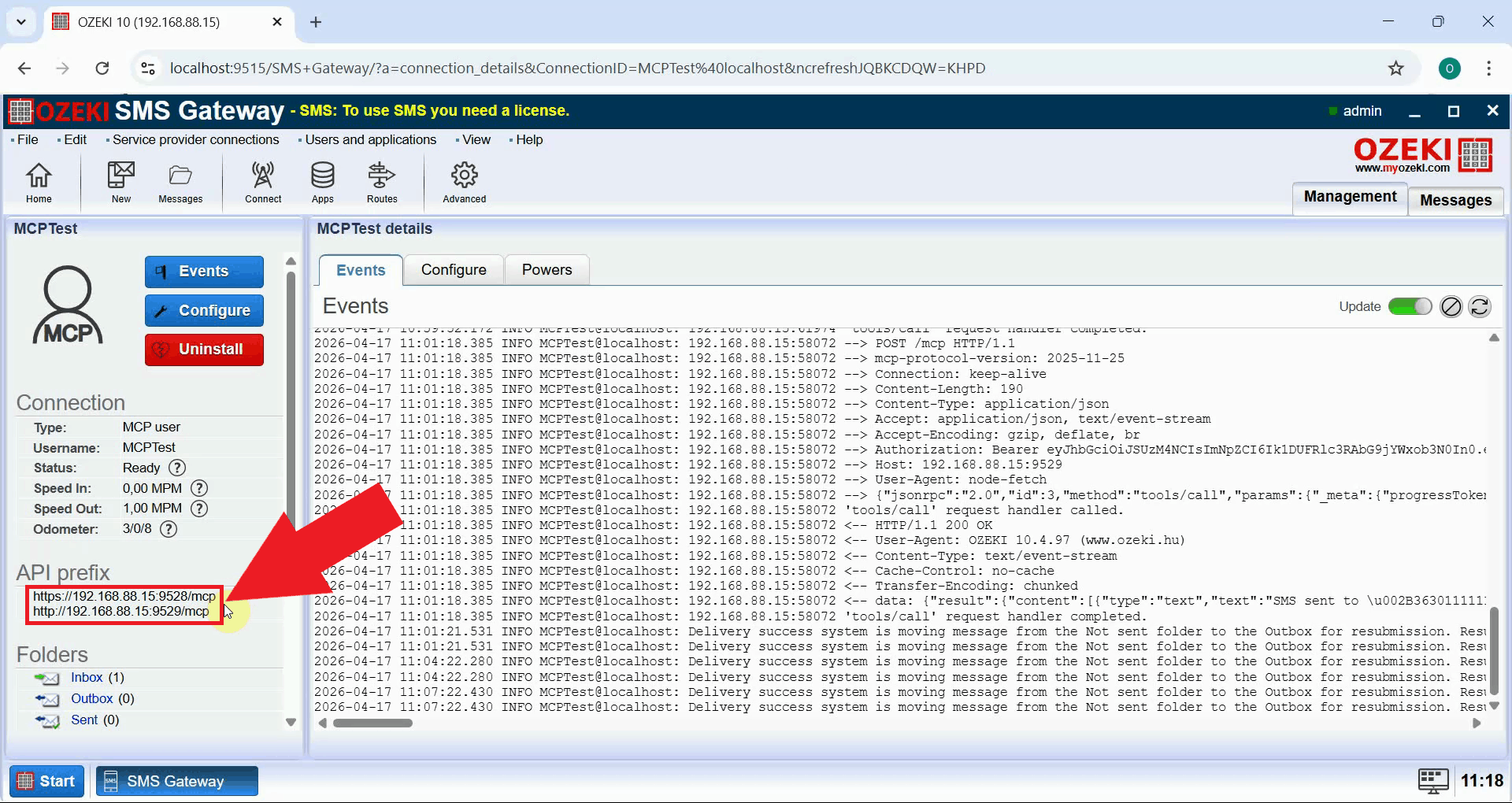
Open Ozeki SMS Gateway in your browser and navigate to the MCP user details page.
Locate the server URL at the API prefix section and copy the value, it will follow the format
http://{address}:9529/mcp. You will need this URL when configuring
MCP Inspector in the next step (Figure 2).
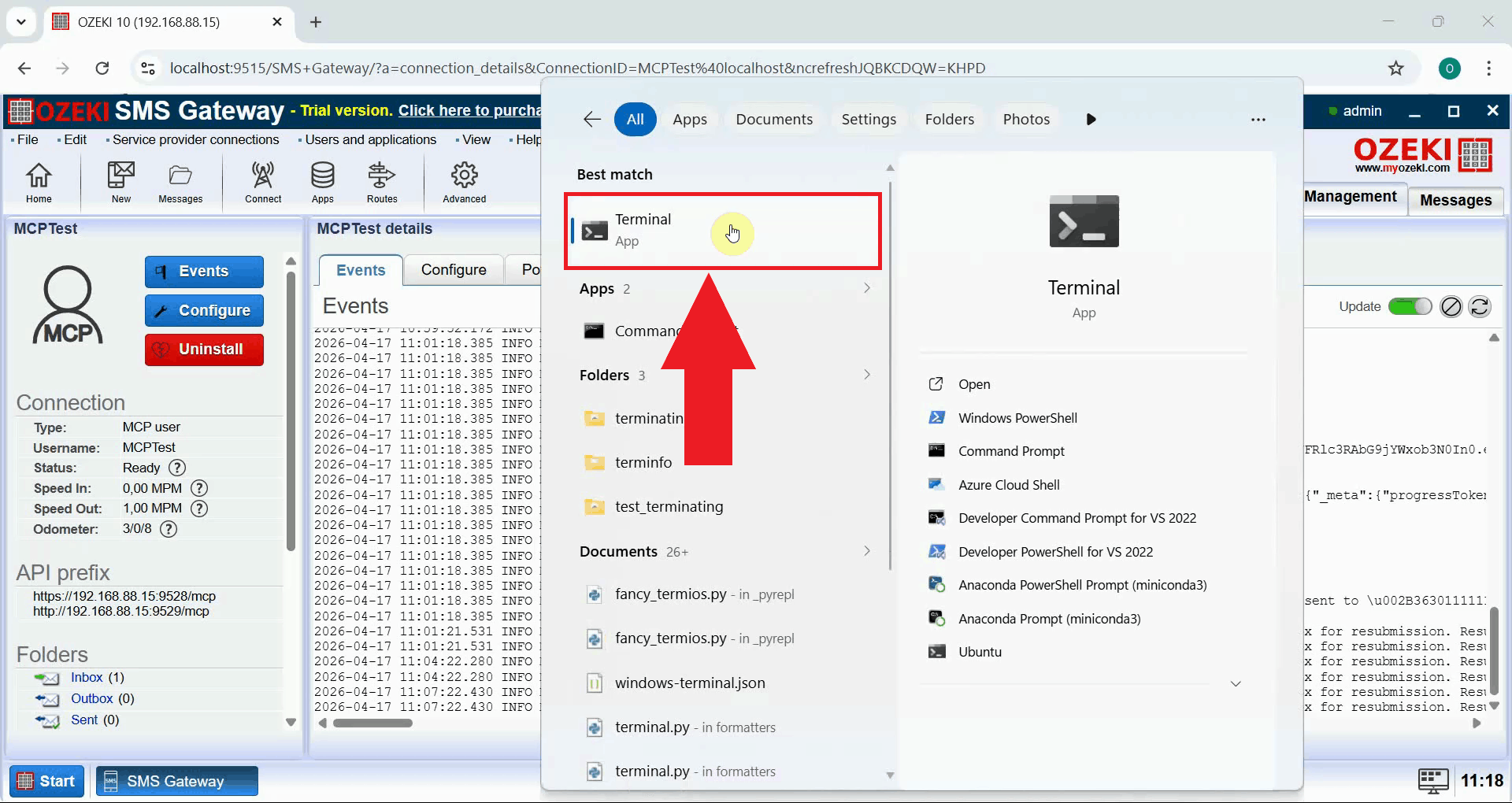
Open a terminal window by searching for Terminal in the start menu and clicking on the application. The terminal provides a command-line interface where you'll run the MCP Inspector (Figure 3).
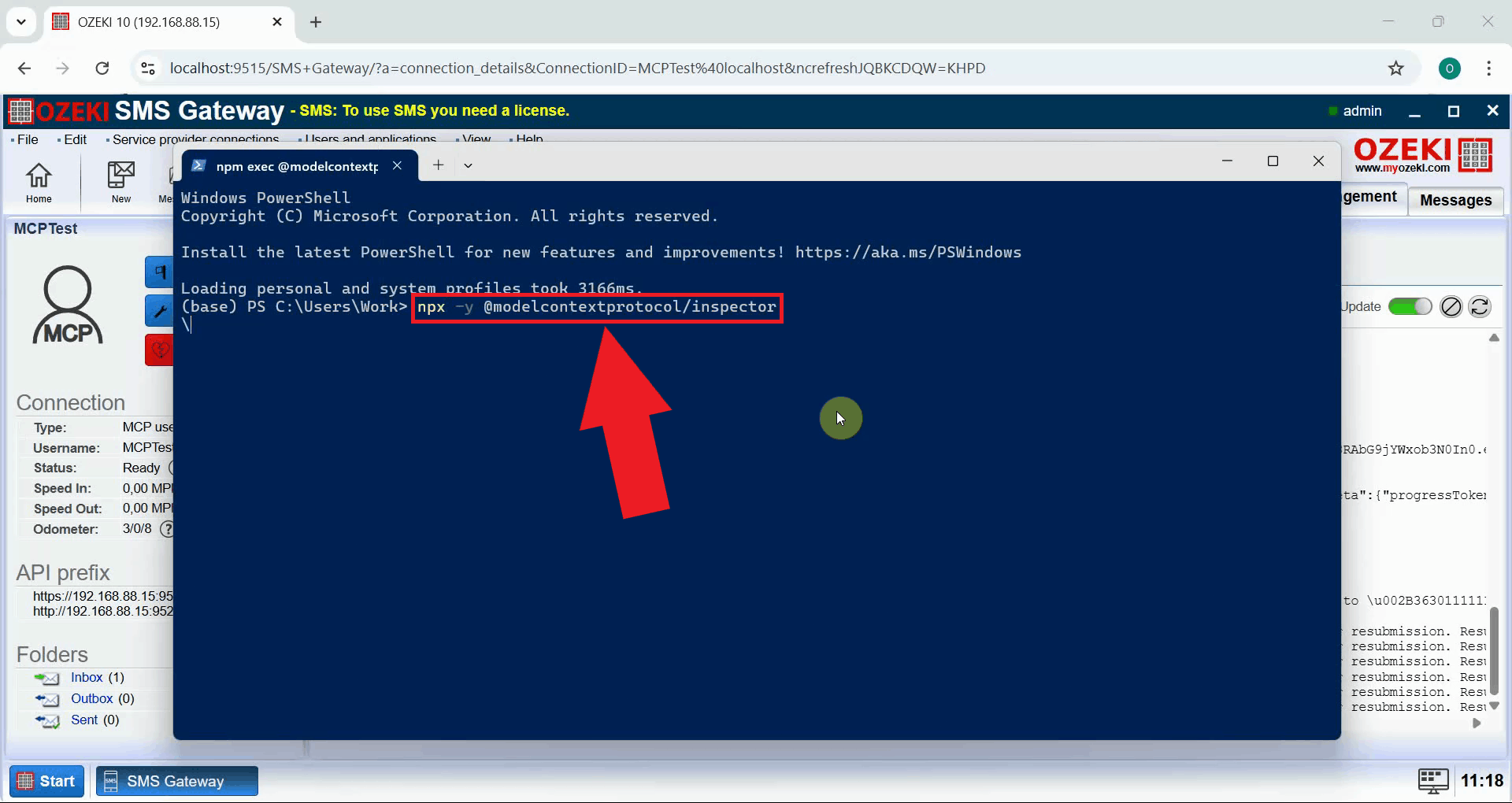
In the PowerShell terminal, execute the command npx -y @modelcontextprotocol/inspector
to launch the MCP Inspector.
Node.js will fetch the latest version of the tool automatically and open it in
your default web browser (Figure 4).
npx -y @modelcontextprotocol/inspector
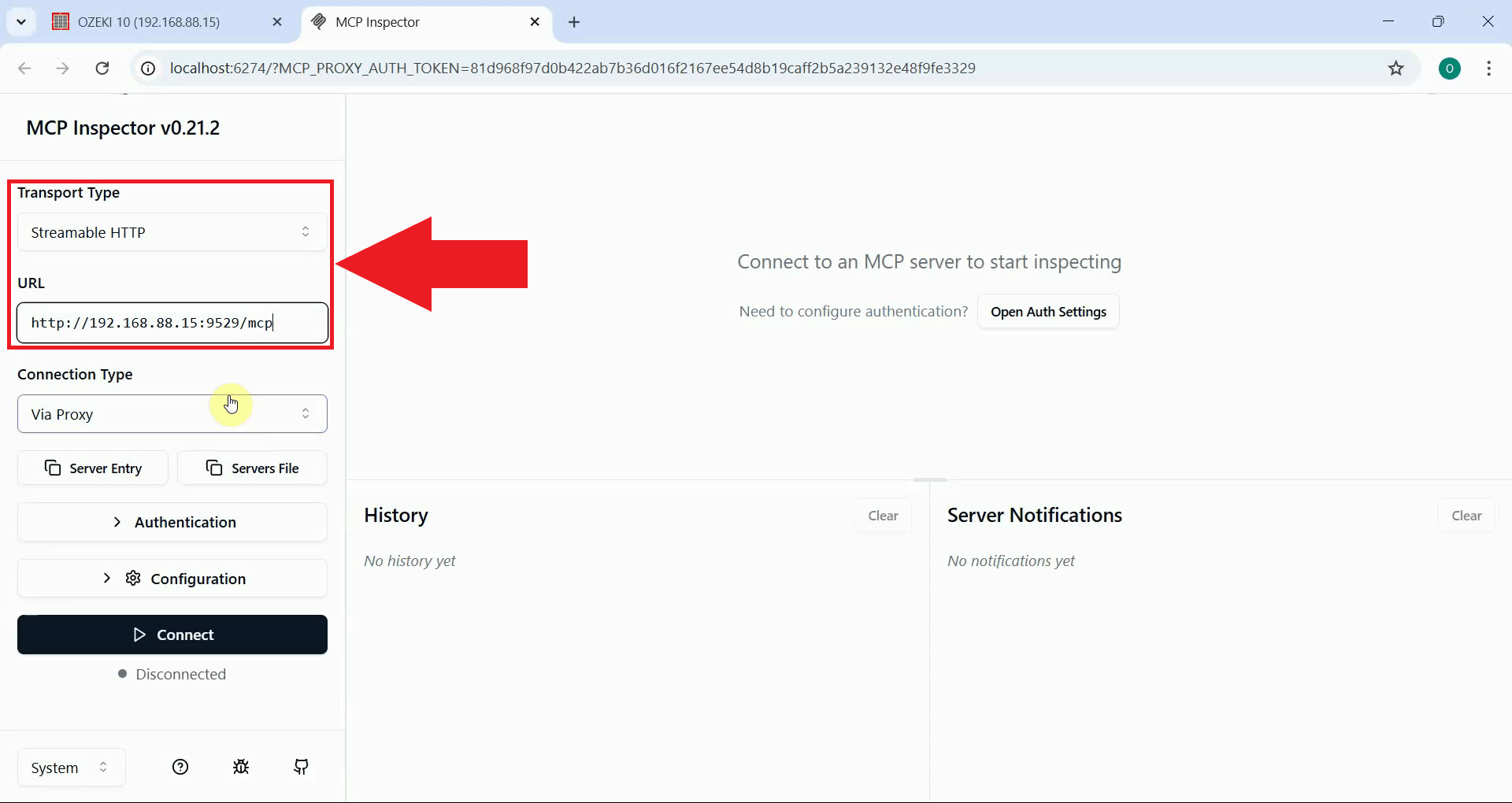
In the MCP Inspector interface, locate the transport type selector and choose Streamable HTTP. Then paste the server URL you copied from the MCP user details page into the server URL field (Figure 5).
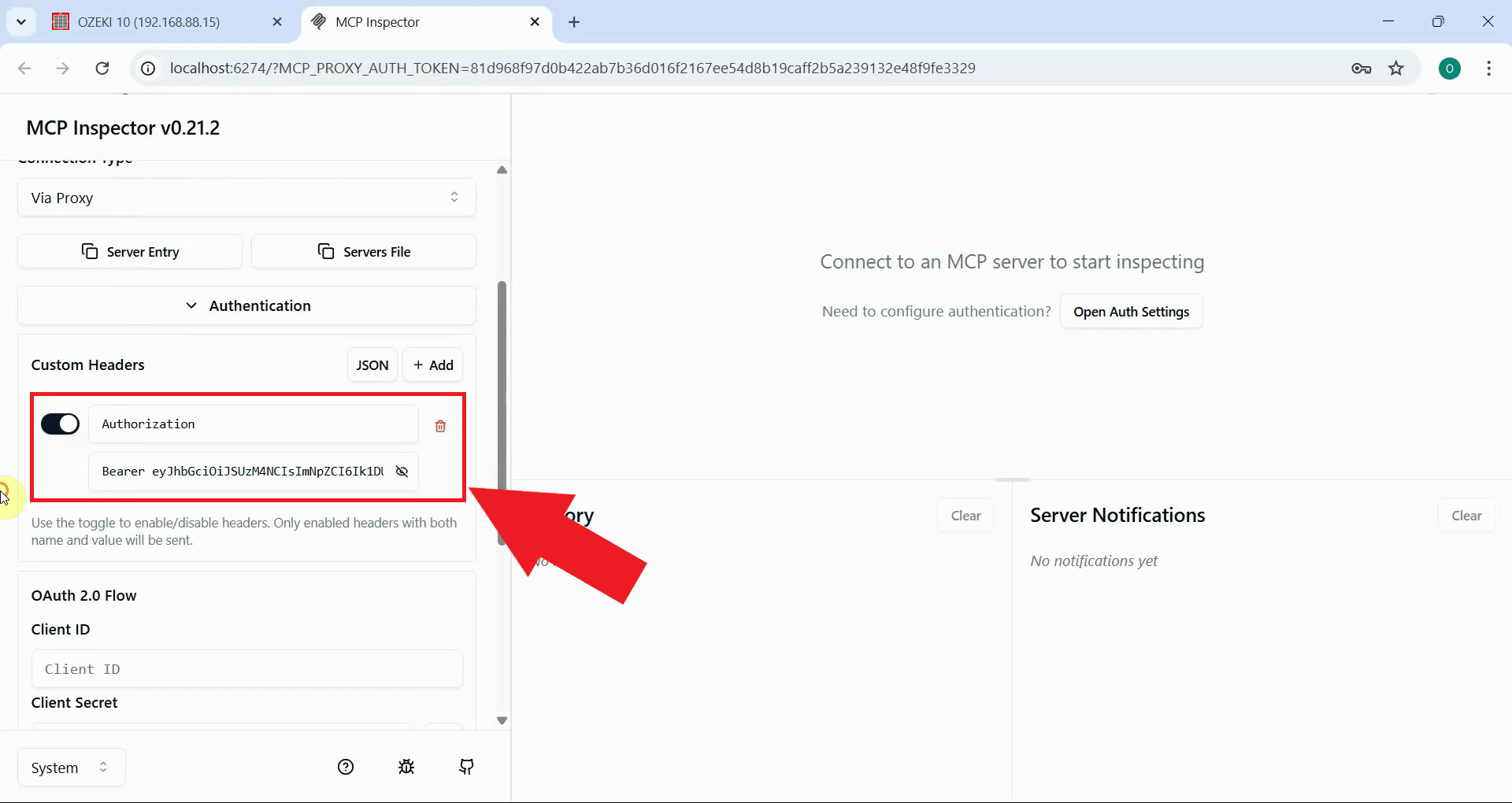
Locate the custom headers section and enable the Authorization header.
In the value field, enter Bearer followed by the API key you generated
for your MCP user account (Figure 6).
Step 3 - Connect to the gateway
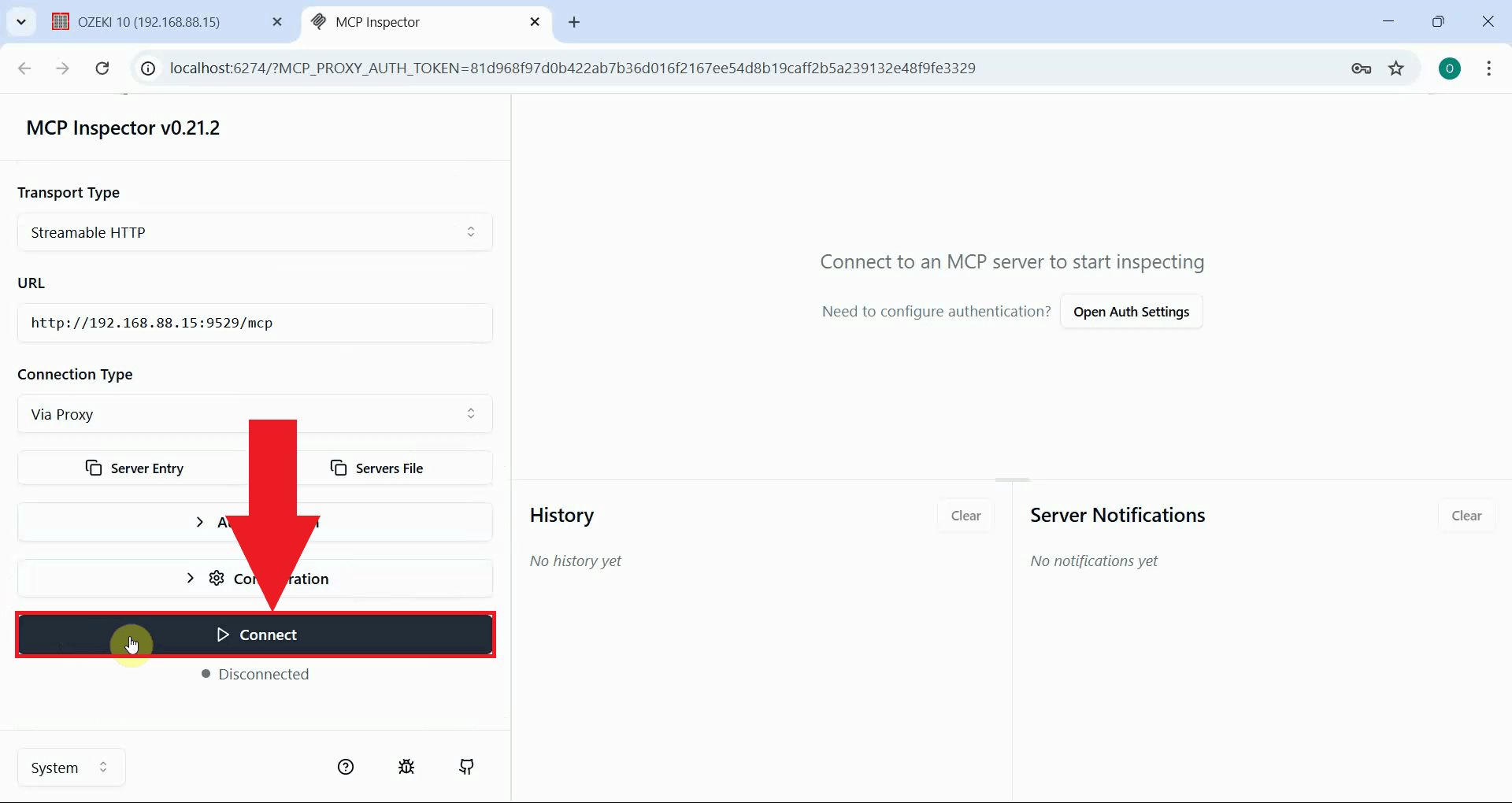
Click the Connect button to establish the connection to your Ozeki SMS Gateway MCP server. If the server URL and API key are correct, MCP Inspector will connect successfully and the interface will update to reflect the active connection (Figure 7).
Step 4 - Run the list incoming SMS messages tool
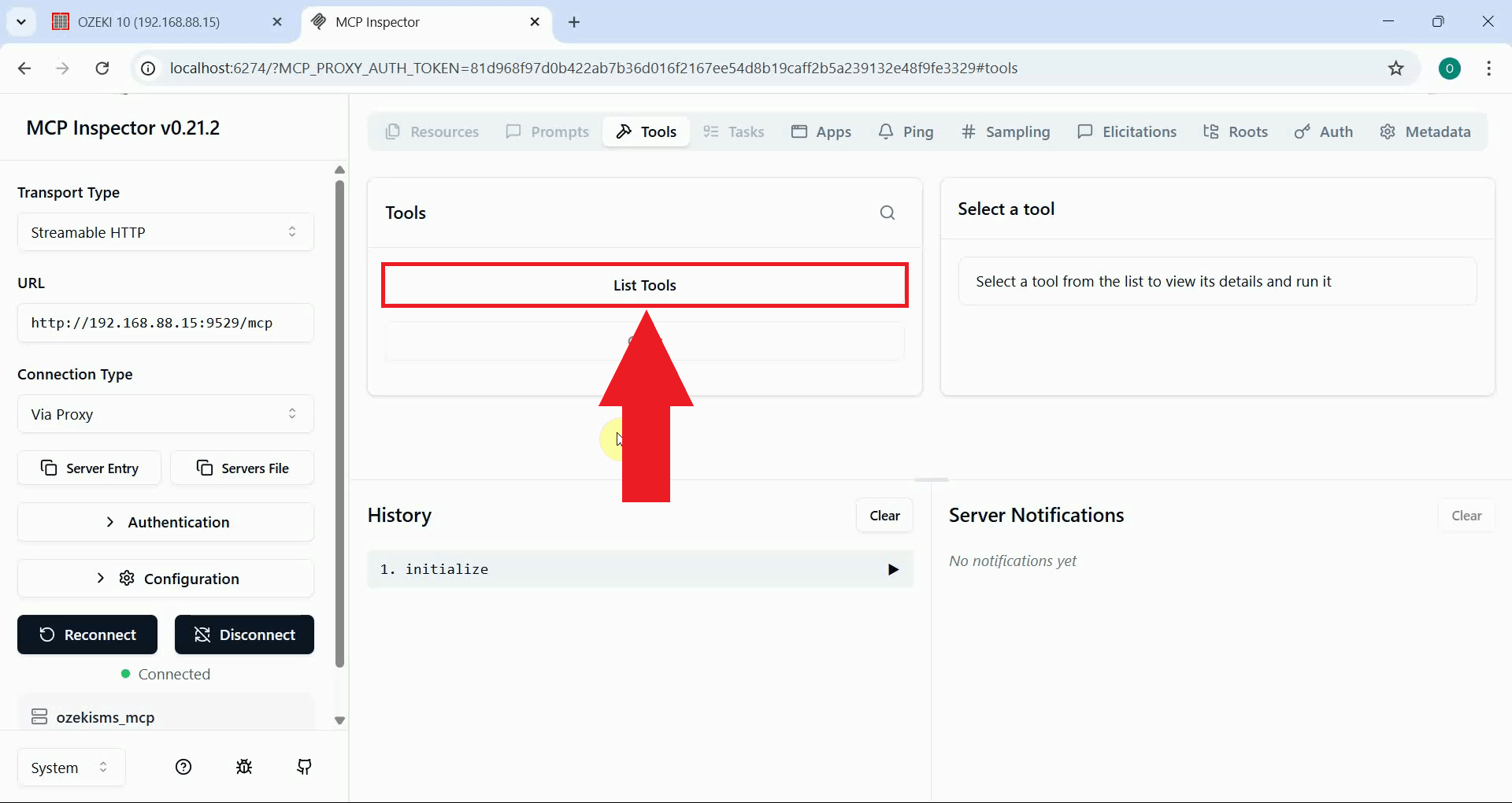
Click the List Tools button to display all available tools provided by the Ozeki SMS Gateway MCP server(Figure 8).
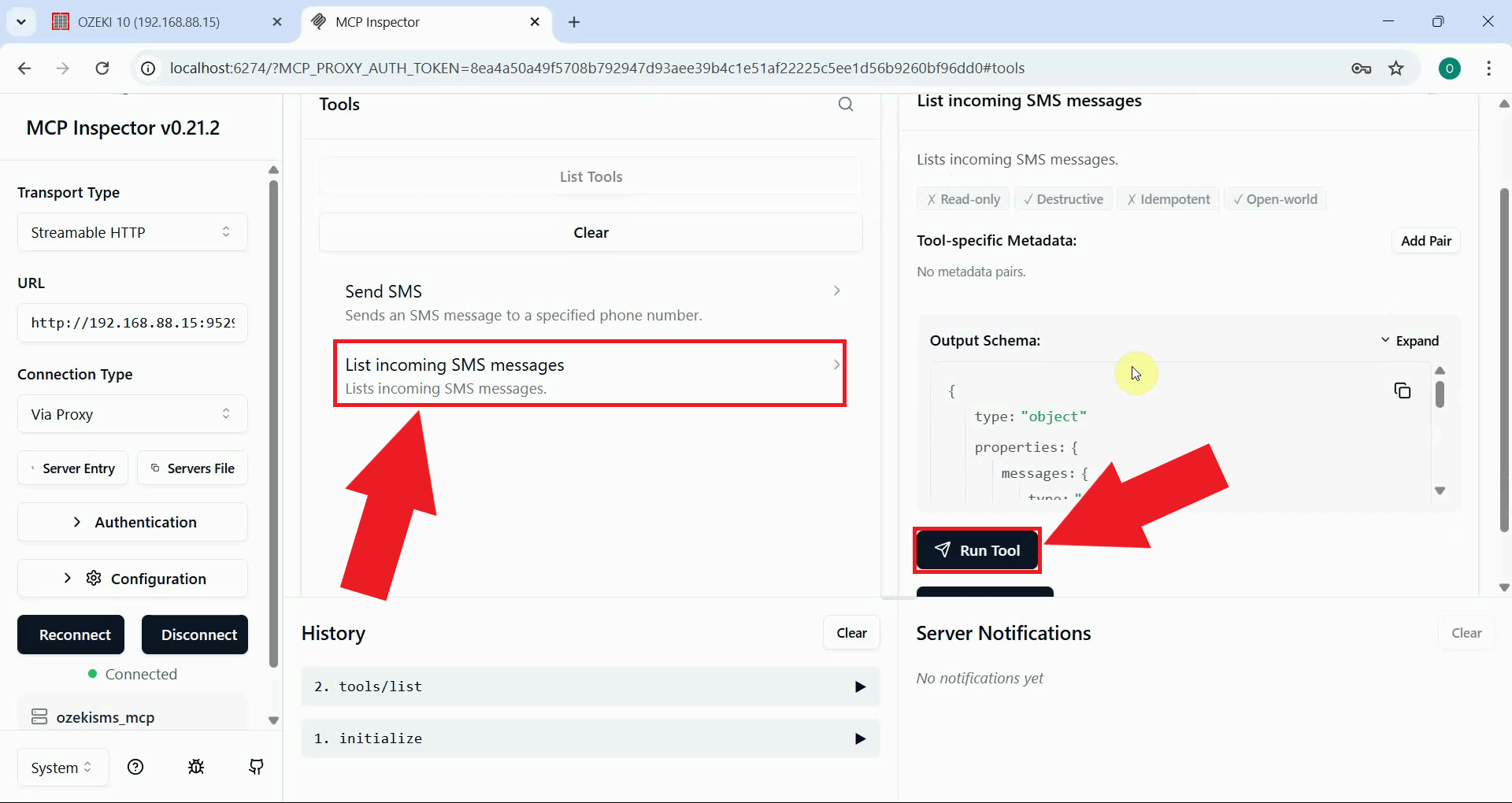
Select the List incoming SMS messages tool from the tools list and click the Run tool button. The tool does not require any parameters, it will retrieve all messages currently stored in the gateway inbox (Figure 9).
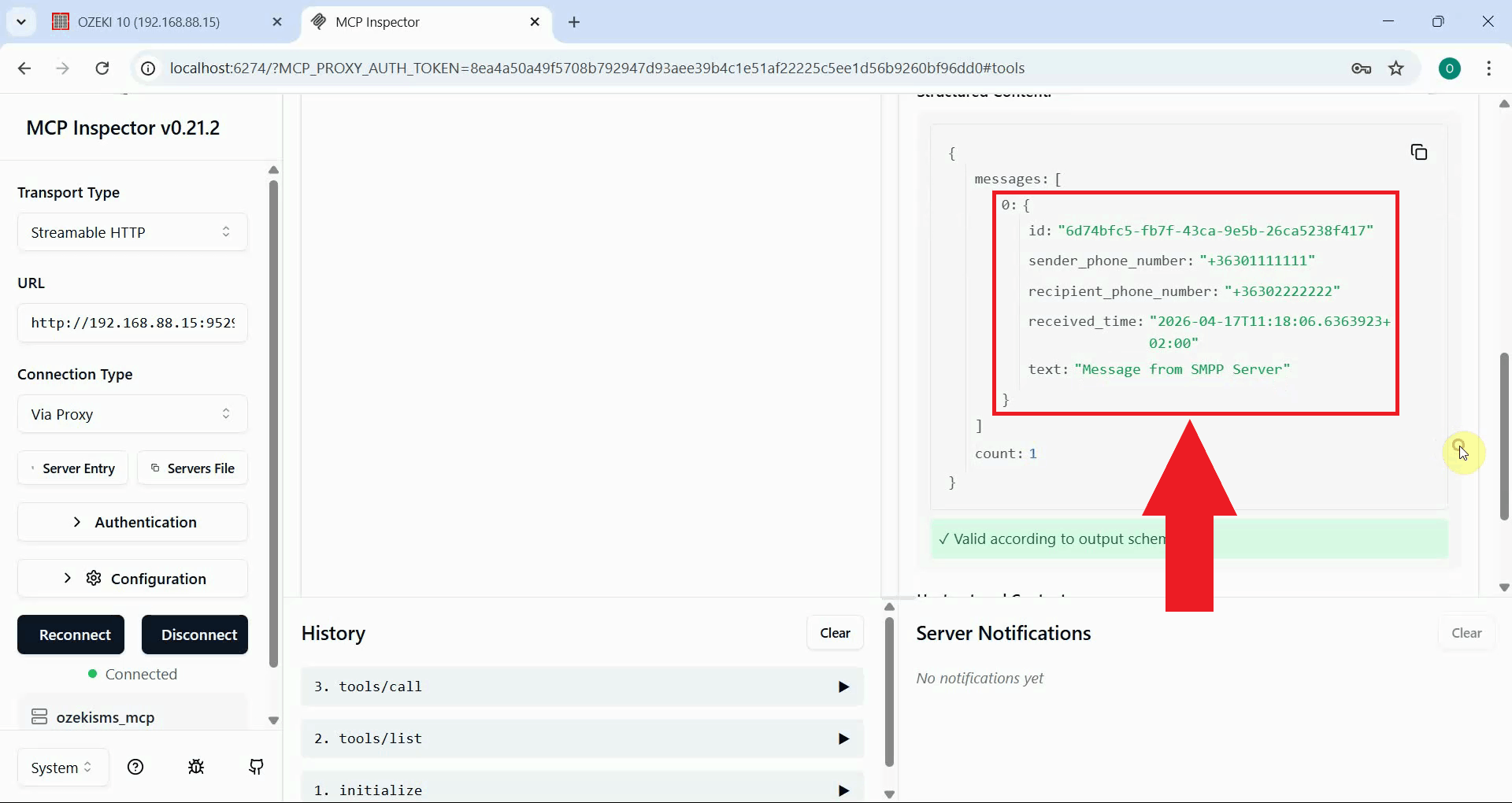
MCP Inspector will display the result returned by the gateway. You should see the test message you sent in Step 1 listed in the output, including the sender number, message text and timestamp (Figure 10).
Step 5 - Confirm delivery in the gateway logs
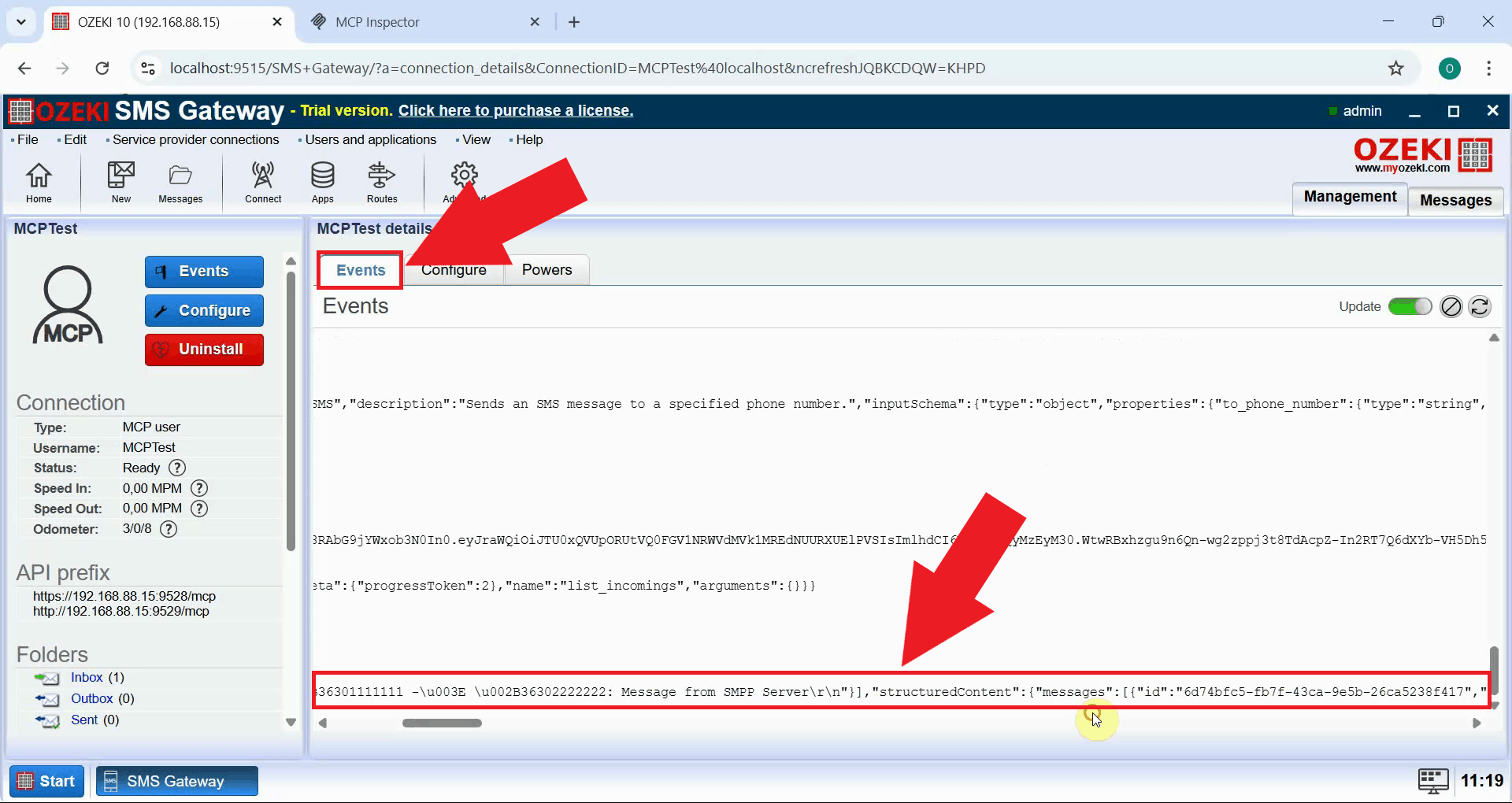
Switch back to Ozeki SMS Gateway and open the event log for your MCP user. You should see a log entry recording the incoming message retrieval request made by MCP Inspector, confirming that the API key authentication and tool call were processed correctly (Figure 11).
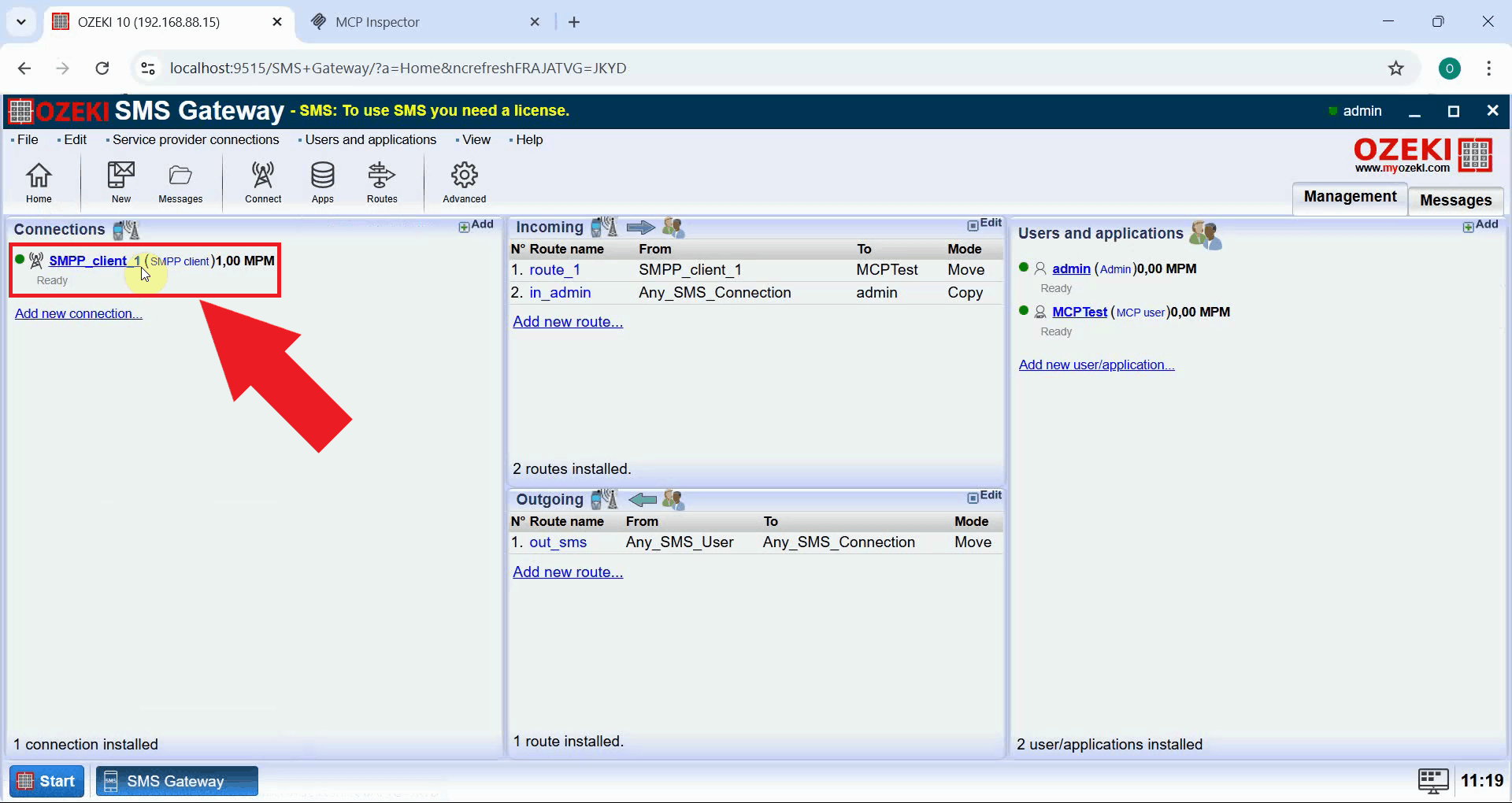
From the Ozeki SMS Gateway home page, locate your configured SMPP client in the Connections panel and click on it to open its details page (Figure 12).
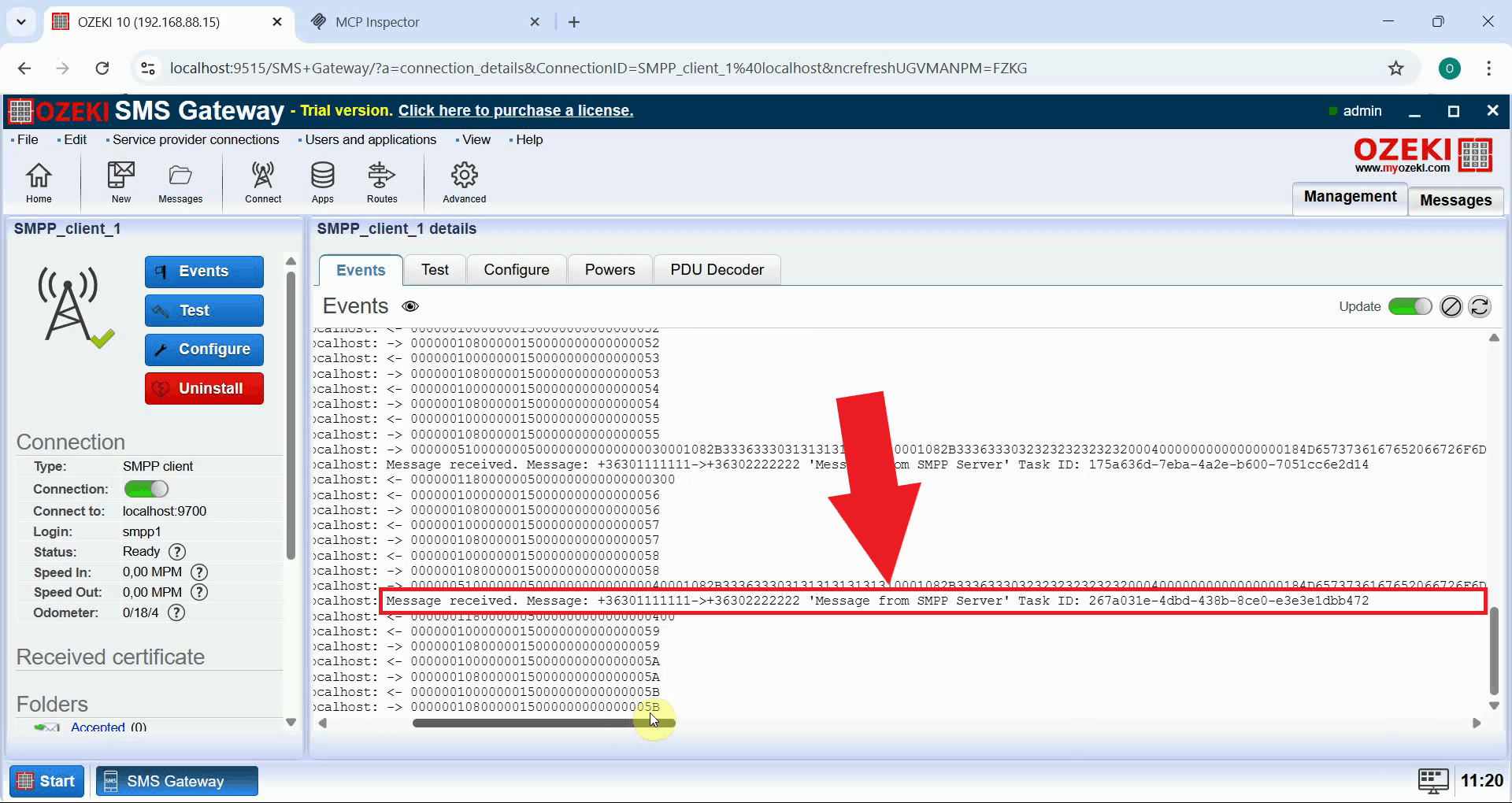
In the SMPP client event log, you can see the original test message that was sent in Step 1. This confirms the full round-trip: the message entered the gateway through the SMPP client and was successfully retrieved through the MCP interface (Figure 13).
Final thoughts
You have successfully retrieved an incoming SMS message from Ozeki SMS Gateway using MCP Inspector. This confirms that your MCP user account is correctly configured for both sending and receiving messages, and that any MCP-compatible AI agent can use the same connection details to read incoming SMS messages from your gateway.